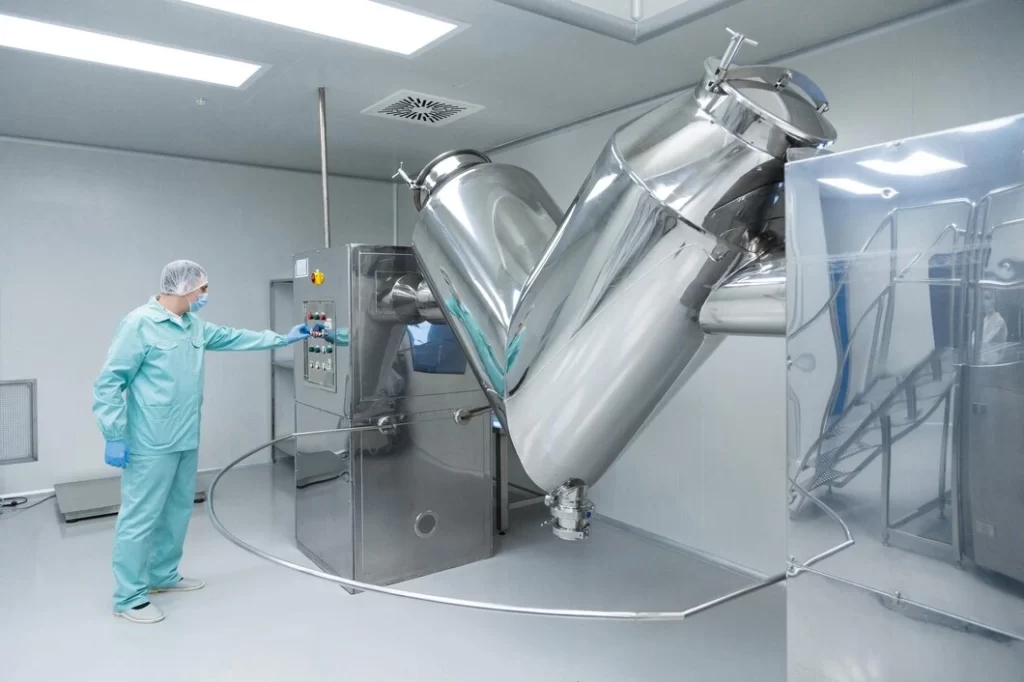
Where precision engineering meets pharmaceutical blending performance
In pharmaceutical manufacturing, powder blending is one of the most critical steps in ensuring product quality and consistency. Inside a blending unit, the process may appear simple: a controlled rotation of stainless steel equipment, operating quietly and efficiently.
However, within that system, millions of particles are being redistributed in a highly controlled manner to achieve uniform composition.
This stage directly impacts dose accuracy, product stability, and regulatory compliance. Every tablet, capsule, or powder dose must deliver consistent potency. If blending is not performed correctly, no downstream process, including compression, coating, or filling, can correct the variation.
For this reason, pharmaceutical blending is not just about process control. It is equally dependent on equipment design and fabrication quality.
Critical factors such as surface finish, weld quality, vessel geometry, sealing systems, and discharge valve design all influence blend uniformity and process reliability. Poor fabrication can lead to segregation, cross-contamination, or inefficient material flow, affecting both product quality and production timelines.
High-performance blending starts with precision-engineered equipment built to meet the strict demands of pharmaceutical manufacturing.
For welding and fabrication partners serving pharma facilities exclusively, the blender isn’t just equipment. It’s a precision instrument built from stainless steel discipline.
Let’s break down why.
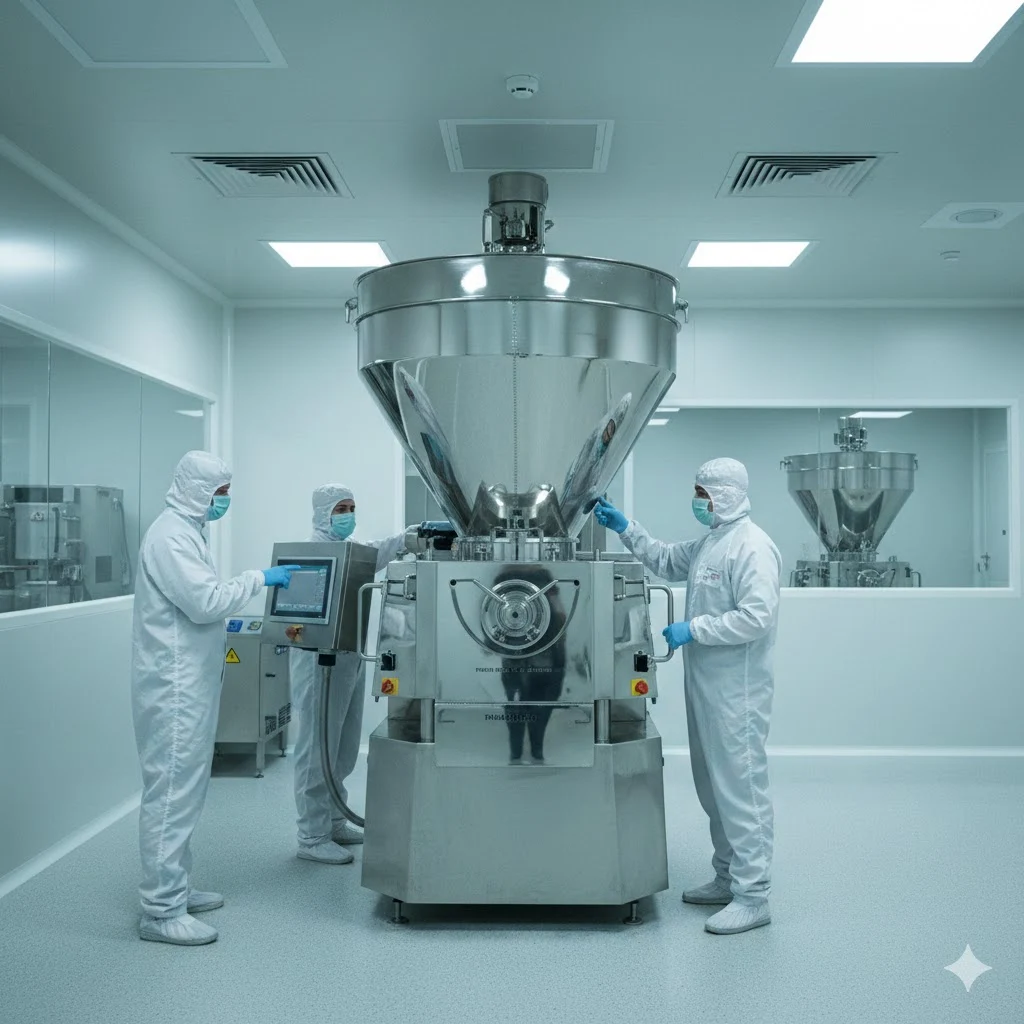
Walk into a pharmaceutical cleanroom, and you feel it instantly. The air is different. Controlled. Filtered. Almost quiet enough to hear your own heartbeat. Every surface looks intentional. Every piece of equipment feels like it belongs exactly where it stands.
That calm isn’t accidental. It’s engineered. And right at the center of that controlled choreography sits one critical piece of Pharmaceutical Equipment that quietly decides whether a batch passes or fails: the blender.
Blenders are not just rotating vessels mixing powder. In pharmaceutical production, they are guardians of uniformity. They determine whether each capsule carries the correct dose or whether a batch drifts out of specification. And because they live inside cleanrooms, their design influences something bigger than mixing alone.
They influence cleanroom performance itself.
For welding and fabrication providers who serve pharmaceutical firms exclusively, this is where craftsmanship matters. Every weld seam, every surface finish, every corner radius either protects the environment or compromises it.
Let’s dig into why design matters so much and how the right fabrication makes all the difference.
Cleanrooms are not just rooms with filters. They are ecosystems. Airflow, surfaces, temperature, humidity, operator movement, everything interacts. Equipment isn’t separate from that system. It’s part of it.
A poorly fabricated blender can shed particles, trap residue, disturb airflow, and quietly undo the work of an entire HVAC system.
Good equipment supports the cleanroom. Bad equipment fights it. And cleanrooms always win that fight, just not in the way you want.
Contamination doesn’t always arrive dramatically. It sneaks in.
A rough weld edge flakes off a microscopic particle. A threaded joint traps residue. A small cavity holds moisture overnight. That’s all it takes.
Equipment surfaces, joints, and materials directly affect particle generation. Sharp corners create turbulence. Crevices collect powder. Dead spaces become breeding grounds for microbes.
From a fabrication standpoint, these risks are avoidable. Continuous welds. Smooth transitions. No exposed threads. No hidden pockets. No “almost cleanable” spots.
If you can’t wipe it in one pass, it probably doesn’t belong in a cleanroom. Dead spaces are more than annoyances; they’re biological real estate for sorts of parasites. Moisture plus residue equals growth. Growth equals contamination. Contamination equals failed batches. Simple chain reaction. Expensive consequences.
Regulators don’t just look at processes; they look at equipment design.
FDA 21 CFR Part 211 and EU GMP Annex 1 are explicit about cleanability, contamination control, and hygienic construction. Equipment must be built to prevent cross-contamination and allow thorough cleaning.
Inspectors notice details like:
Fabrication isn’t cosmetic polish; it’s compliance insurance.
This isn’t abstract theory. It’s a lived reality. In our work with major pharmaceutical manufacturers, we’ve seen how small design flaws lead to big problems. OOS results traced back to residue buildup, recalls triggered by contamination events that started with something as minor as an unfinished weld seam.
One microscopic defect can derail millions of doses. When patients rely on precision, “close enough” doesn’t cut it.
Also Read:What’s So Special About Stainless Steel?
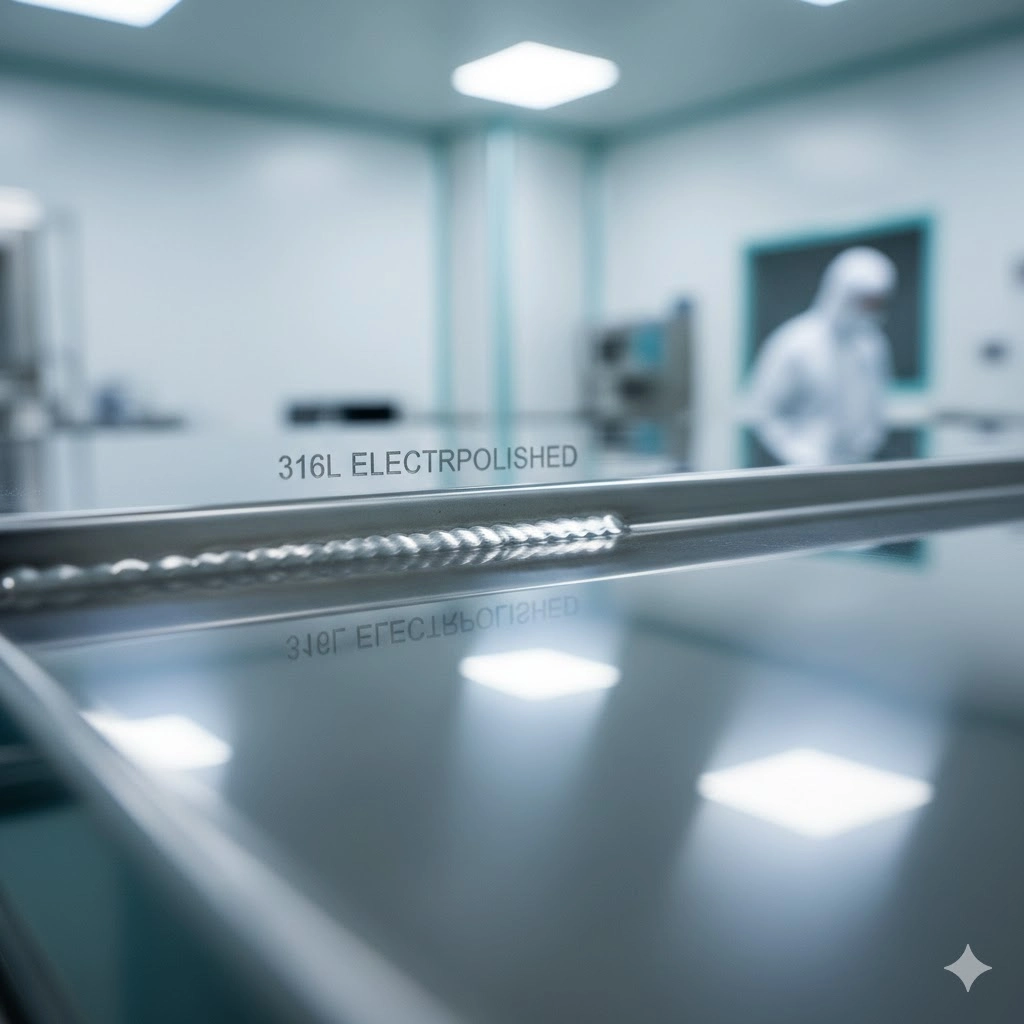
There’s a reason 316L stainless steel is practically the language of pharma.
Electropolished finishes reduce surface roughness and make cleaning easier. Passivated finishes improve corrosion resistance. Both serve a purpose, but electropolishing often wins where hygiene is critical.
(Material deep dive available on our stainless steel products page.)
Stainless isn’t just tradition, it’s survival.
Particles often originate from the equipment itself.
That’s preventable.
Design choices matter:
Proper welding techniques like TIG and orbital welding create smooth, continuous seams that don’t trap contaminants.
Grinding after welding isn’t optional; it’s mandatory.
If a weld looks rugged, it probably behaves ruggedly too.
Cleanability isn’t something you “figure out later.” It must be baked into the design.
CIP and SIP compatibility allow internal cleaning without dismantling everything. Sloped surfaces promote drainage so water doesn’t pool. Quick-release fittings make manual cleaning faster.
Technical Callout:
Pharmaceutical surface finish targets typically require Ra ≤ 0.8 µm, with tighter values for critical contact areas. Below that threshold, residues struggle to cling. Above it, you’re basically inviting them to stay.
Equipment placement affects airflow like rocks affect a stream. Block the wrong area and turbulence forms. Turbulence carries particles. Particles land where they shouldn’t. Blenders must align with unidirectional airflow patterns and work with HEPA systems, not against them. The cleanest air in the world doesn’t help if your equipment creates stagnant pockets.
People are still part of the process. If equipment is awkward to use, shortcuts happen. Intuitive controls, safe loading heights, interlocks, and clear access points reduce human error and support OSHA and ISO 14644 standards. Good ergonomics aren’t luxuries, they’re risk reduction tools.
Pharma evolves quickly. Today’s line doubles tomorrow. Modular cleanroom panels, mobile blenders, and scalable frames allow growth without tearing down entire rooms. Flexibility equals longevity.
Rigid designs age fast. Modular systems adapt.
Non-stainless metals corrode. Porous plastics shed. Particles follow. There’s no workaround here. Wrong materials equal wrong results involving Poor Welding and Joint Design, and Rough welds and exposed threads trap contaminants like magnets.
Microbes love texture. So do residues. Smoothness isn’t aesthetic, it’s hygienic. Neglecting Drainage and dead legs, water pooling after cleaning leads to microbial growth. Dead legs in piping or vessels create stagnant zones. Validation fails quickly when moisture lingers.
Blocking HEPA filters or disrupting airflow creates particle chaos.
Cleanrooms rely on movement. Interrupt it, and contamination spreads.
Our in-house engineering team designs exclusively for pharmaceutical environments. We use 3D modeling and CFD analysis to study airflow before fabrication begins. Because guessing airflow is expensive. Simulating it isn’t. Quality Materials and Advanced Fabrication. 316L stainless steel is our baseline, not an upgrade. Electropolishing, passivation, and Ra testing are standard steps, not add-ons.
We measure finishes because “looks smooth” isn’t a metric. We provide:
All our equipment comes with full material certifications and compliance documentation. Paperwork isn’t glamorous. But during audits, it’s gold.
Also Read: 7 Factors You Need to Consider When Choosing a Stainless Steel Blender
Before/after comparisons often show significant ISO 14644 classification improvements.
Better design means faster sanitation and shorter downtime as well as better Compliance and Audit Results, with fewer 483 observations. Fewer deviations. Less stress. Improved Return on Investment and so on. This means less maintenance, fewer failures, and longer equipment life. Good fabrication quietly pays for itself.
Smart Sensors and IoT Integration
Some processes benefit from disposables, others demand a durable stainless steel design must support both strategies thoughtfully.
Blenders may look simple from the outside. Just steel. Just rotation. Just mixing.
But inside pharmaceutical cleanrooms, they carry real weight. They influence contamination, compliance, efficiency, and ultimately patient safety. When fabrication is precise, the equipment disappears into the process. It just works. And in pharma, “it just works” is exactly what you want.