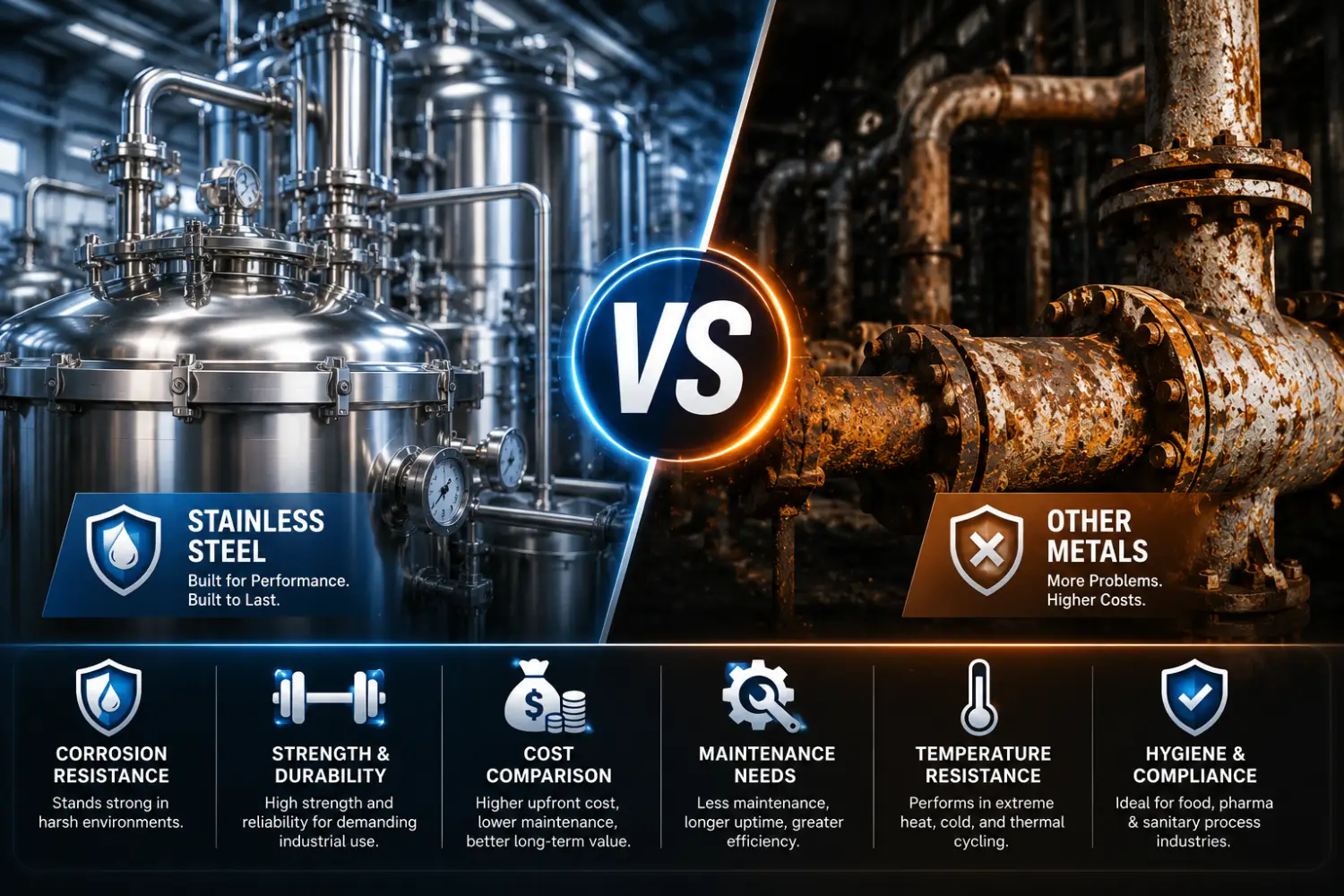
Choosing the right industrial alloy has implications for downtime, cleaning ease, regulation issues, and long-term costs. Therefore, process engineers, plant managers, and buyers often gravitate to comparisons on stainless steel vs other metals to identify the economic sweet spot for initial outlay against long-term performance.
There’s no metal that is the best for all applications. An alloy may work best for a corrosive yet hygienic setting, while a different one may work best for a dry setting that requires structural integrity. Factors that may impact the optimal alloy include exposure to corrosion, required strength, upkeep, and the total cost of the alloy’s lifecycle.
Importance of Metal Choice for Industrial Equipment
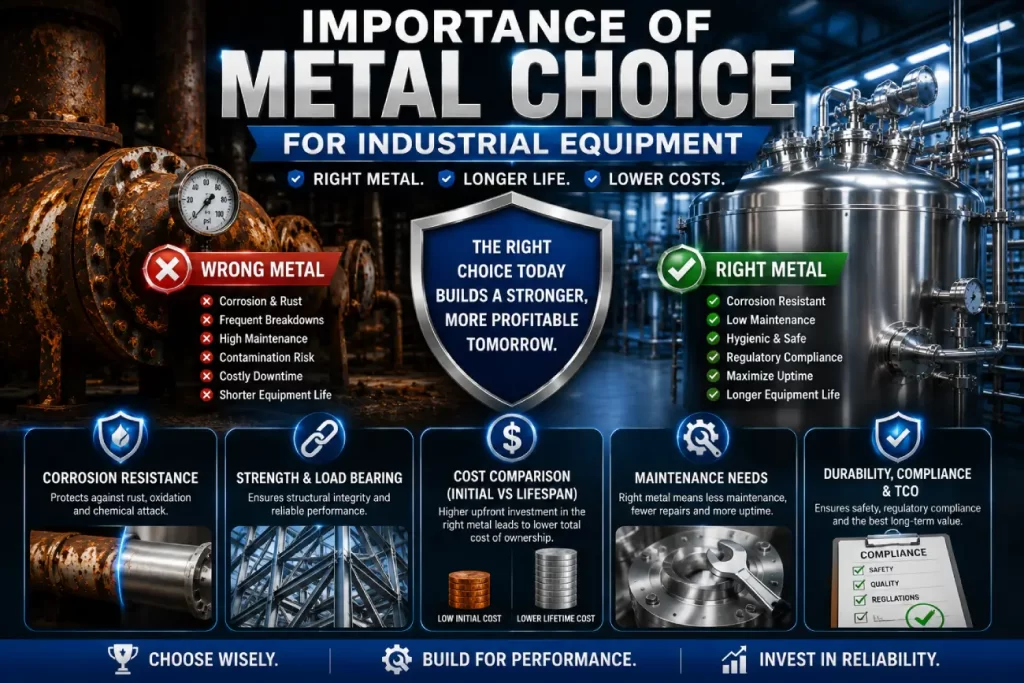
Between chemicals with varying levels of corrosion, abrasiveness, pressure, temperature, and sanitation, industrial equipment undergoes a lot of wear and tear. Choosing the wrong material can increase maintenance, decrease equipment life, and result in contamination, all of which will lead to downtime and losses.
Effects on Durability, Compliance & TCO
How the wrong metal will be pitted against the right metal (for what purpose when talking about chemical processing). Permanent corrosion and costly downtime are the inevitable end results for equipment that has been poorly designed in the area of the right chemicals and the right metal. Especially in the areas of Food processing, chemicals with varying levels of corrosion, abrasiveness, pressure, temperature, and sanitation, it is important to have equipment that will remain safe and sanitary for a long time. Although using lower grade materials may help the initial costs, in the long run, the repairs and increased maintenance will help to negate any initial cost savings.
In the case of stainless steel vs carbon steel, the decision will depend more on the context of corrosion, required maintenance and durability costs rather than on purchase price concerns.
Corrosion Resistance
Because of low chromium concentrations, carbon steel easily rusts when moisture is present. For metals, corrosion results in the gradual loss of surface integrity and continued oxidation which weakens the remaining metal.
Stainless steel contains chromium compositions of 10.5 or greater. This creates a surface passive film, chromium oxide, which protects stainless steel from corrosion. This film will repair itself if it gets damaged and will provide protection in all but a few of the harshest industrial environments.
Strength & Load Bearing
Carbon steel is strong with a high tensile strength, making it ideal for structural frameworks, support systems, and other heavy-duty applications that are of low concern for corrosion.
Stainless steel possesses high strength and also has a good range of durability across temperature. In order to create custom stainless steel tank fabrication, some austenitic grades perform very well and are highly durable in demanding process environments, but may require more specialized manufacturing.
Cost Comparison (Initial vs Lifespan)
Due to low levels of costly alloying elements, carbon steel has a cheaper purchasing cost. However, in a corrosive setting, cost may increase long term due to requiring coatings, frequent repainting, and ever increasing loss of integrity and corrosion.
Stainless steel has a costlier initial purchasing price, but due to needing less maintenance and being corrosion resistant metal comparison (meaning it excels in comparisons), costs less long term due to lower total costs for ownership.
Maintenance Needs
To inhibit corrosion, carbon steel needs periodic inspections and a protective coating. Once coatings deteriorate, corroding instantly worsens and can lead to a loss of structural integrity.
It is very easy to maintain stainless steel compared to other metals. Maintenance is simplified due to the fact that passive surface layers do not require coatings. There is also little to no risk in contamination when using stainless steel since there is no peeling paint to worry about.
Stainless Steel vs. Aluminum
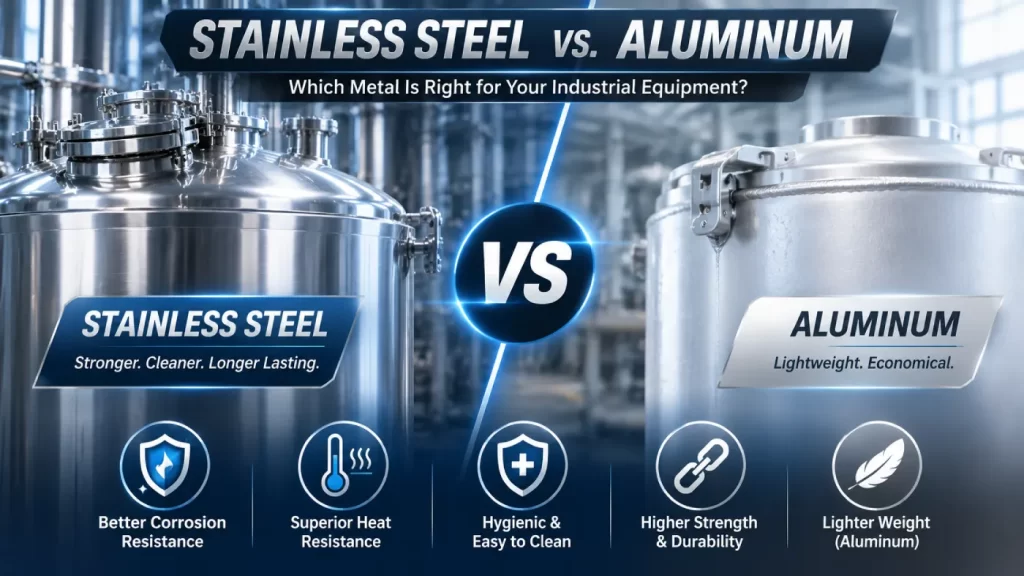
During an stainless steel vs aluminum industrial scale use comparison, the most obvious trade-off to consider is between the weight of the material and its long-term durability.
Weight and Strength Trade-Offs
In comparison to stainless steel, aluminum is very lightweight, so it is usually preferred whenever weight reductions are a priority. Aluminum’s low tensile strength is a concern because components must be thicker to support the same load resulting in increased costs.
Hygiene and Cleanability
Surfaces of softer metals like aluminum have low resistance to scratches and impact which makes them less than ideal for hygienic processing. Scratches also harbor contaminants which is exacerbated by aluminum’s susceptibility to corrosion in alkaline cleaners.
On the other hand, stainless steel is a cleaner, harder, and more durable metal, and combined with its excellent resistance to corrosion, makes it very useful for sanitary processing equipment.
Cost, Availability, and Temperature Resistance
Stainless steel is a premium product compared to aluminum and is harder to machine. Costs for aluminum is especially impacted by the price of machining and the cost of specialized equipment for welding.
Aluminum, like all metals, is very weak at high temperatures, and steam will break its integrity while stainless steel will perform excellently. The same is true for materials subject to high thermal cycling.
Weldable Stainless Steel and Specialty Stainless Steel Alloys
Polymeric materials like 304 and 316 L, in most working environments, are satisfactory. However, considering highly corrosive media, elevated temperatures, and critical concentrations of chloride, it may be necessary to apply special materials.
Duplex stainless steel has a higher strength and a better resistance to pitting and stress corrosion cracking, which allow its application in aggressive marine and chemical environments.
For highly aggressive acids and very severe operating conditions, Hastelloy is an alloy that offers an excellent corrosion resistance. Due to their high costs and low availability, specialty alloys are only used in cases where standard stainless steel cannot meet operational requirements.
Alloy Comparison Table
|
Material |
Maintenance |
Initial Cost |
Long Term Value |
|
Stainless Steel |
Excellent |
Moderate to High |
Excellent |
|
Carbon Steel |
High |
Low |
Moderate |
|
Aluminum |
Moderate |
Low to Moderate |
Moderate |
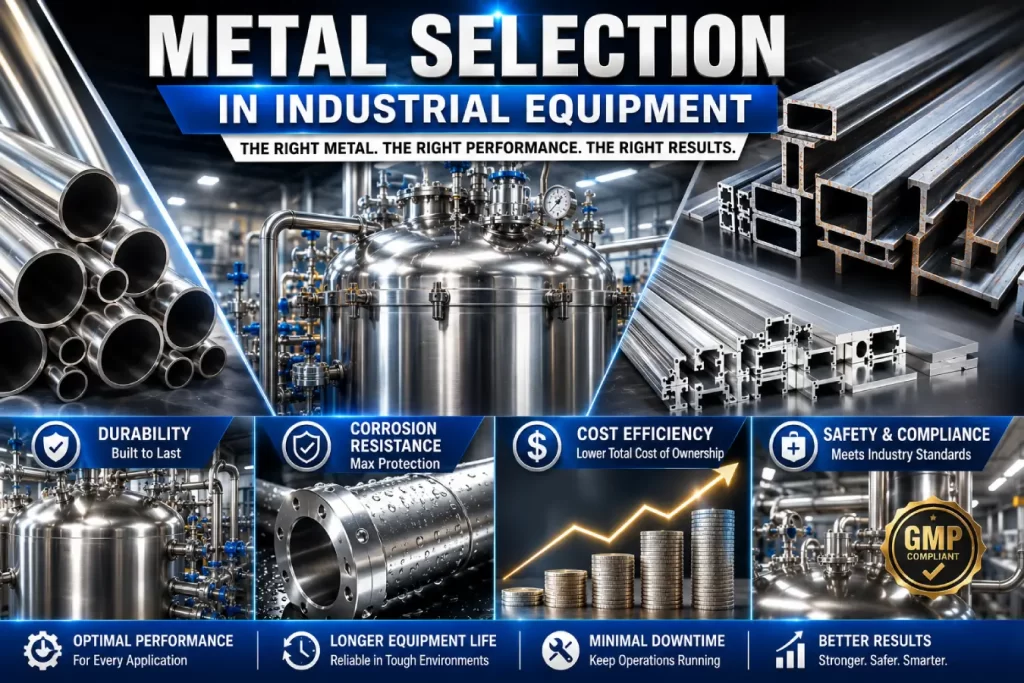
Selecting an alloy for an application is a highly complicated task, as the metal must be able to endure the stresses and strains from normal operation. Carbon steel is used for dry, non-corrosive structural supports, and in non-structural components that must be lightweight, aluminum is a feasible choice.
For non-structural components that must be lightweight, aluminum is a feasible choice. When corrosion resistance, durability, and long-term reliability are priorities, stainless steel is the best metal for industrial equipment.
Pharmaceutical Manufacturing
Stainless steel is the most appropriate if you are in a dilemma of which metal is best for pharma equipment choice. It is the industry standard because it meets the GMP guidelines for equipment materials, can endure numerous CIP and SIP cycles, and will not corrode due to contact with purified water and pharmaceutical ingredients.
Stainless steel grades such as 316L, which have lower carbon content, can be resistant to corrosion and pitting. Additionally, they can be electropolished to produce a surface with excellent smoothness which can reduce the risk of surface contamination and can be compliant with the requirements of most regulatory agencies.
Food and Beverage Processing
Stainless steel has become the standard material for best metal for food processing equipment due to its value for manufacturing equipment that is non-reactive, easy to clean, and resistant to the cleaning of equipment that can consist of washdowns with highly acidic solutions.
Its smooth surface also facilitates cleaning and minimizes bacterial growth. See our 304 vs 316L stainless steel guide for further information and assistance on the most appropriate grade of stainless steel.
Chemical Processing
Chemical processing equipment can be subjected to harsh operating conditions and will come into contact with highly corrosive and aggressive chemicals. Stainless steel provides a combination of reliable corrosion resistance and structural integrity which makes it ideal for processes involving tanks, reactors, and piping.
Cosmetic and Nutraceutical Applications
Stainless steel is well depended on for the manufacturing of both cosmetics and nutraceuticals as it provides for the manufacturing of a hygienic and uncontaminated product while also allowing cleaning to be done between manufacturing runs to uphold the integrity of the product.
When Other Metals Might Make Sense
Stainless steel is often the most appropriate option. However, there are other metals that can be used which may be better suited to certain applications.
Budget and Health Considerations
Setting aside budget and health considerations, carbon steel is a good option. It is available in a range of structural shapes, which aids in the building of storage systems, and protective coatings can be applied. It has a longer service life when storage systems are used in less corrosive and less hygienically demanding environments.
Weight-Sensitive Applications
Where building a system is weight-sensitive, aluminum is preferable. It is a readily available, lightweight option. It is also more efficient, as long as the systems do not interact with corrosive substances or elevated temperatures.
The Decision-Making Process
Consider long-term costs, performance, and the level of maintenance the system will require and decide the appropriate balance. This is best done by asking the right questions.
Questions to Consider when Choosing a Metal
- What will the system be exposed to? Consider the system’s interaction with various substances, as this will influence the system’s corrosive resistance.
- What will be the system’s operating and interacting temperatures? Be sure the system’s material can withstand the temperature of the system and any of the interactions.
- What are the applicable codes? It is important to know which codes the system will be required to meet, e.g. FDA, GMP, 3-A, pressure vessels, and/or GMP.
- What are the cleaning protocols? the material may be influenced by what will be done to the system.
- What are the costs over the entire system life? Consider the cost of maintenance, downtime, system repairs, and replacements, as well as the cost of the system.
If you are considering many options, you can request a material consultation from our engineers.
How Ability Fabricators Inc. (AFI) Can Help
The right material choice is critical, but successful projects also require skilled engineering and exacting fabrication.
Ability Fabricators Inc. employs skilled engineers and fabricators to design and build custom process equipment for our clients. We utilize extensive 3D modeling and design engineering for the industries we serve. Whether your project requires fabrication using 304 stainless steel or 316L stainless steel (electropolished), we will provide a custom solution. Our team constructs solutions to the ASME, TSSA, and CSA B51 standards.
Faqs
Not necessarily. For dry structural applications that are less susceptible to corrosion, carbon steel will be less expensive than stainless steel.
Stainless steel will not contaminate products and will resist corrosion. Additionally, it is able to withstand CIP cleaning and will hold up to steam and other forms of sterilization.
The initial cost of stainless steel is higher than other materials; however, the long-term cost of ownership is lower due to the extended service life and reduced maintenance.
Yes, for particular applications. However, stainless steel is superior to aluminum for food grade applications due to its greater strength and sanitation.