A single corrosion failure can bring an entire chemical plant to a standstill. A pinhole leak in a piping run, a cracked weld on a reactor, or product contamination from a flaking interior wall causes far more damage than just a paused shift. It risks operator safety, draws regulatory scrutiny, and burns client trust. When you handle aggressive liquids and vapors, picking your processing equipment isn’t just an asset purchase – it’s an operational insurance policy.
Getting that choice right requires looking at three things: matching the metal grade to your specific chemical stream, designing out the physical traps where corrosion starts, and keeping up with preventive care. With decades of hands-on fabrication experience, our engineering team builds corrosion resistant chemical processing equipment designed to keep your plant safe, compliant, and running without expensive surprises.
Why Corrosion Resistance Matters in Chemical Processing
Chemical streams packed with chlorides, strong acids, or caustics will chew through standard metals surprisingly fast. Preventing catastrophic failure starts with understanding how and where corrosion actually takes root.
Common Failure Points (Welds, Joints, Seals)
Corrosion almost never attacks a tank uniformly – it hunts for local weak spots. The area right next to a weld (the heat-affected zone), tiny gaps under flange gaskets, and minor surface scratches are prime targets. Welds fail first because the intense heat of joining metal changes its protective oxide layer. Without low carbon grades or proper post-weld treatment, chromium carbiding (sensitization) leaves the grain boundaries vulnerable to rapid attack.
Cost of Corrosion: Downtime, Contamination & Compliance Risk
Replacing a compromised tank is usually the smallest bill you’ll pay. The hidden costs add up fast:
- Unplanned Downtime: Stalled lines mean missed delivery windows, idle operators, and burned revenue.
- Product Contamination: Metal flakes and iron oxide ruin batch chemistry, forcing you to scrap entire runs.
- Regulatory Fines: Canadian safety inspectors don’t compromise on structural integrity. Corroded vessels can trigger immediate fines or plant shutdown orders.
Types of Corrosion Chemical Facilities Face
Different chemical mixes attack metal in different ways. Identifying your primary threat dictates how we engineer your defense.
Pitting & Crevice Corrosion
Pitting leaves microscopic, deep holes across metal surfaces. It usually starts when chloride ions break through the passive film. Crevice corrosion happens in shielded spaces – like under bolts, washers, or gaskets – where stagnant fluid turns acidic over time. Both are dangerous because a component can fail structurally while looking completely fine from a distance.
Chloride Stress Corrosion Cracking
If you combine tensile stress, high heat (above 50°C), and chloride exposure on standard 300-series stainless steel, you get Chloride Stress Corrosion Cracking. It accounts for about a third of all stainless steel failures in chemical plants, creating fine spider-web cracks that can cause a vessel to split open without warning.
Chemical/Acid Attack
Uniform corrosion thins out the metal evenly across all exposed surfaces. It is common when holding or piping mineral acids like sulfuric, hydrochloric, or phosphoric acid. Controlling it depends entirely on matching the metal alloy to the exact acid concentration, fluid velocity, and operating temperature.
Choosing the Right Stainless Steel Grade
Selecting your base metal is the single most critical engineering decision you’ll make. The grade must match your chemical environment – period.
316L vs 304 for Chemical Environments
Most industrial chemical processing relies on two primary grades: 304 and 316. The real difference between them is molybdenum.
- 304 / 304L Stainless Steel: The standard workhorse. 304L handles organic acids, mild washdown chemicals, and general processing quite well. It’s the cost-effective choice when chlorides aren’t part of the equation.
- 316L Stainless Steel: Grade 316L adds 2% to 3% molybdenum, which dramatically boosts its defense against chlorides, pitting, and crevice corrosion. The “L” means low carbon, preventing weld sensitization. If you work with acetic, formic, or sulfuric acids – or run sterile pharmaceutical lines – 316L is the baseline material you need.
When to Consider Duplex or Higher-Alloy Stainless Steel
When conditions get extreme, standard grades won’t cut it:
- Duplex Alloys (like 2205): Offer double the yield strength of 316L and hold up exceptionally well against chloride stress cracking. They’re built for sour gas lines, hot brine, and high-caustic processing.
- Higher-Alloy Austenitics (like 904L, 317LMN): Packed with extra nickel and molybdenum, these alloys handle severe mineral acid streams, concentrated salts, and aggressive chemical blends that would turn 316L into a sieve.
Matching Grade to Specific Chemicals/pH Ranges
As a rule of thumb: the higher the acid concentration, chloride count, and operating heat, the higher the alloy content you need. We always recommend reviewing detailed chemical compatibility charts and speaking with our metallurgists before signing off on vessel specs.
Design Factors That Improve Corrosion Resistance
Buying the right metal is only half the job. How your equipment is shaped, joined, and finished dictates how long it lasts on your floor.
Weld Quality & Passivation
Welding disrupts the metal’s natural defenses. Heat tint and scale must be ground out, followed by chemical passivation. Acid passivation strips free iron off the surface and forces a fresh, chromium-rich protective layer to form. At Ability Fabricators, we rely on automated orbital TIG welding and run validated passivation cycles on every assembly we build.
Surface Finish (Electropolishing vs Mechanical Finish)
Smooth surfaces don’t give corrosive chemicals anything to grab onto. Mechanical grinding smooths out rough edges, but electropolishing takes an ultra-thin layer of metal off microscopically. The result is a mirror-smooth surface that resists pitting and makes washdowns significantly faster.
Avoiding Crevices & Dead Legs in Design
Smart tank design keeps fluid moving and prevents pooling:
- We use continuous, fully penetrated welds instead of overlap joints or mechanical rivets.
- We radius internal tank corners so material can’t settle in sharp edges.
- We eliminate dead legs in piping where stagnant liquids sit and turn aggressive.
Gasket & Seal Material Compatibility
Never overlook your seals. Gaskets must resist your process fluids just as well as the steel itself. An incompatible gasket will swell, break down, or trap aggressive ions directly against the metal flange, causing severe crevice corrosion underneath.
Custom Equipment Built for Chemical Processing
Custom fabrication lets you design out vulnerabilities before equipment ever lands on your delivery dock.
Tanks, Vessels & Containers for Chemical Storage
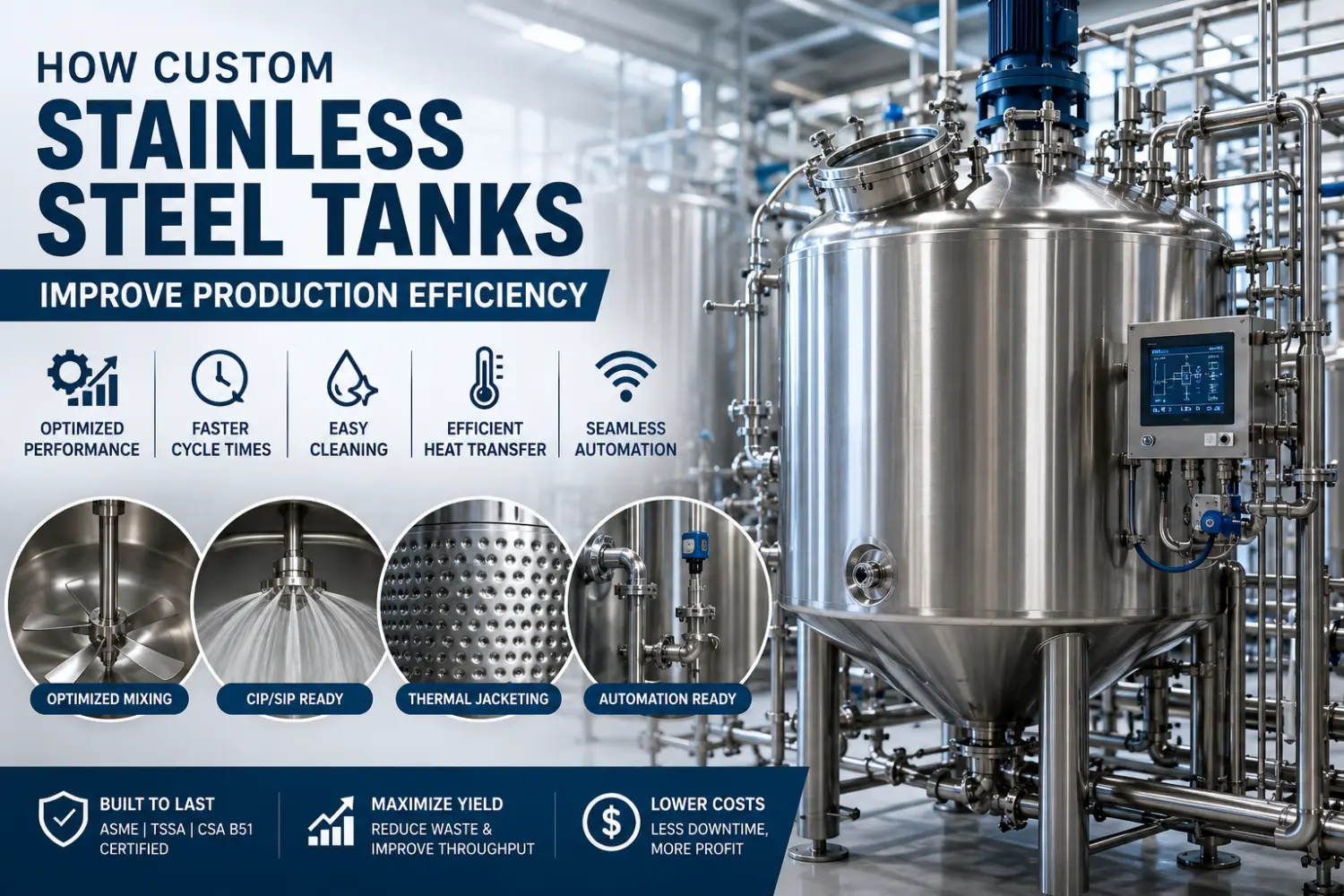
We build custom stainless steel storage tanks, mixing vessels, and intermediate bulk containers (IBCs) specifically for chemical service. Whether you need 304, 316L, or exotic alloys, we integrate heating jackets, heavy-duty mixers, and custom valving directly into the build.
Chemical-Resistant Panels & Enclosures
Corrosive fumes destroy unrated electrical boxes fast. We fabricate custom stainless steel electrical panels and enclosures that meet NEMA 4, NEMA 4X, and CSA standards. They seal tight against harsh washdown sprays, never rust, and don’t require protective paint that can flake into your process.
To see how we build for Canadian processing plants, take a look at our specialized Chemical Processing Equipment in Canada capabilities.
Maintenance & Inspection Best Practices
Even the best-built 316L tank needs routine care to stay in top shape over a 20-year lifespan.
Passivation Re-treatment Schedules
That protective passive layer isn’t indestructible. Heavy mechanical wear, abrasive cleaners, or high-heat shocks wear it down over time. Scheduling regular re-passivation treatments keeps the stainless steel protecting itself.
Visual & NDT Inspection Points
Build these checks into your routine maintenance schedule:
- Look closely at weld seams for micro-cracks or faint rust spots.
- Check vessel low points, drain ports, and under flange gaskets for fluid pooling.
- Run Non-Destructive Testing (NDT) – like dye penetrant or ultrasonic wall thickness scans – to find internal cracks before they turn into actual leaks.
Signs of Early-Stage Corrosion to Watch For
- Tea-Staining: Light brown surface discoloration showing that the oxide film is breaking down.
- Pitting: Microscopic dark dots or pinholes, often surrounded by faint rust rings.
- Weld Bleeding: Dark lines or rust weeping directly out of a welded joint.
Conclusion
Keeping your processing lines running comes down to practical choices: select the right steel grade for your chemicals, design out fluid traps, and stay on top of passivation. Whether you need standard 304L storage or high-alloy 316L reactors, every material decision impacts your long-term maintenance costs and plant safety.
Ability Fabricators brings over 150 years of combined hands-on experience to every project. We don’t just weld metal – we engineer custom solutions built around your exact process chemistry.
Have a project in mind or need to upgrade aging tanks? Contact our engineering team today to talk through your specs or request a quote.
Faqs
It depends entirely on what you’re running through it. 316L is the go-to for chlorides, organic acids, and general washdowns. For hot, highly concentrated mineral acids or severe stress conditions, duplex grades like 2205 or high-nickel alloys like 904L offer much stronger defense.
You can sometimes apply specialized interior coatings or weld overlays, but these are usually temporary fixes. If a vessel is failing structurally, replacing it with the correct alloy grade is almost always more reliable and cost-effective over the long run.
High-risk pressure vessels and tanks handling aggressive acids should get a thorough NDT inspection at least once a year. Line operators should also do quick visual checks during standard washdowns and batch changeovers.
No. Plain 304 is fine for dry powders, mild alkaline solutions, or non-chloride liquids. But if your process involves chlorides, acidic washdown chemicals, or moisture traps, stepping up to 316L gives you a necessary safety buffer.